Testcase GenieFrom PRD to Production Ready Tests in Minutes
Overview
QA teams often spend 40–60% of their time manually creating test cases from Product Requirement Documents (PRDs) and user stories. This process is time-consuming and frequently leads to delayed releases, inconsistent test coverage, and human errors. Additionally, maintaining clear traceability between requirements and test cases becomes difficult as projects grow.
PrismAI solves this challenge by using advanced AI to automatically convert PRDs into structured user stories and comprehensive test cases. It ensures complete traceability from requirements to test execution, helping teams maintain quality while significantly improving efficiency. With PrismAI, organizations can reduce test creation time by up to 80%, accelerate development cycles, and deliver more reliable software.

Key Features
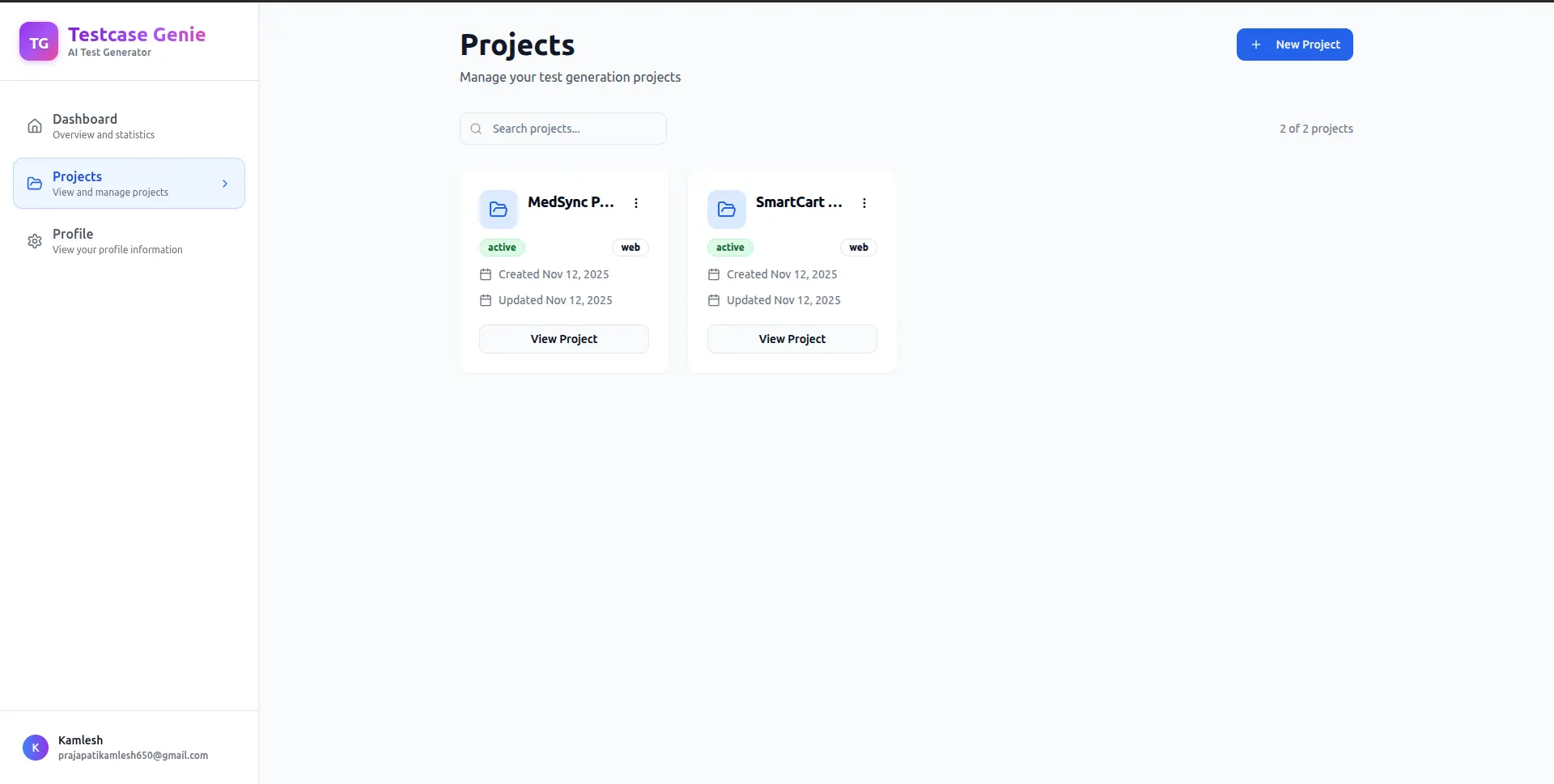
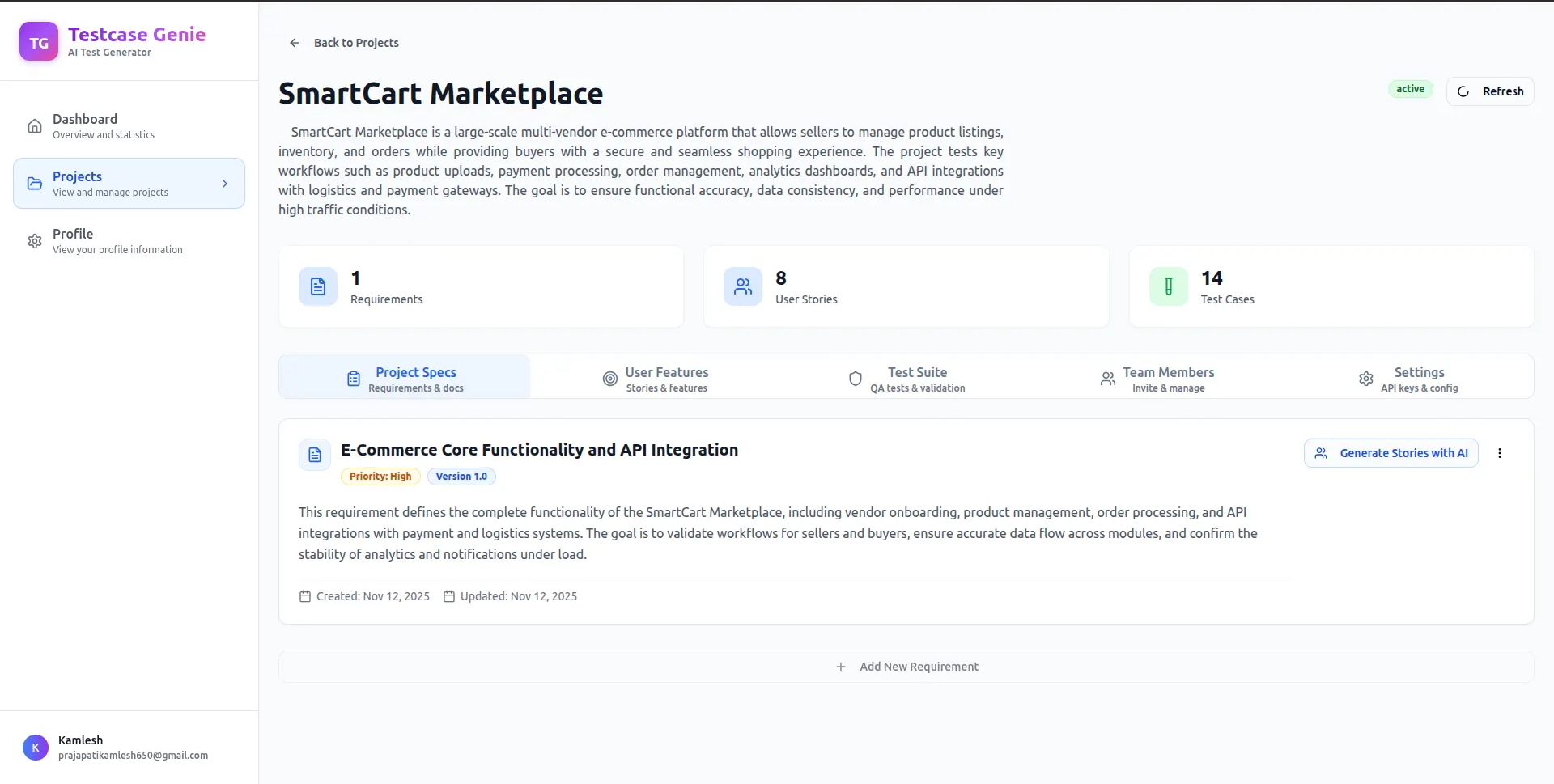
Multi-Project Management
- Create and organize projects by type (Web, Mobile, Desktop, API)
- Upload PRDs per feature or entire product specifications
- Centralized repository for all project requirements
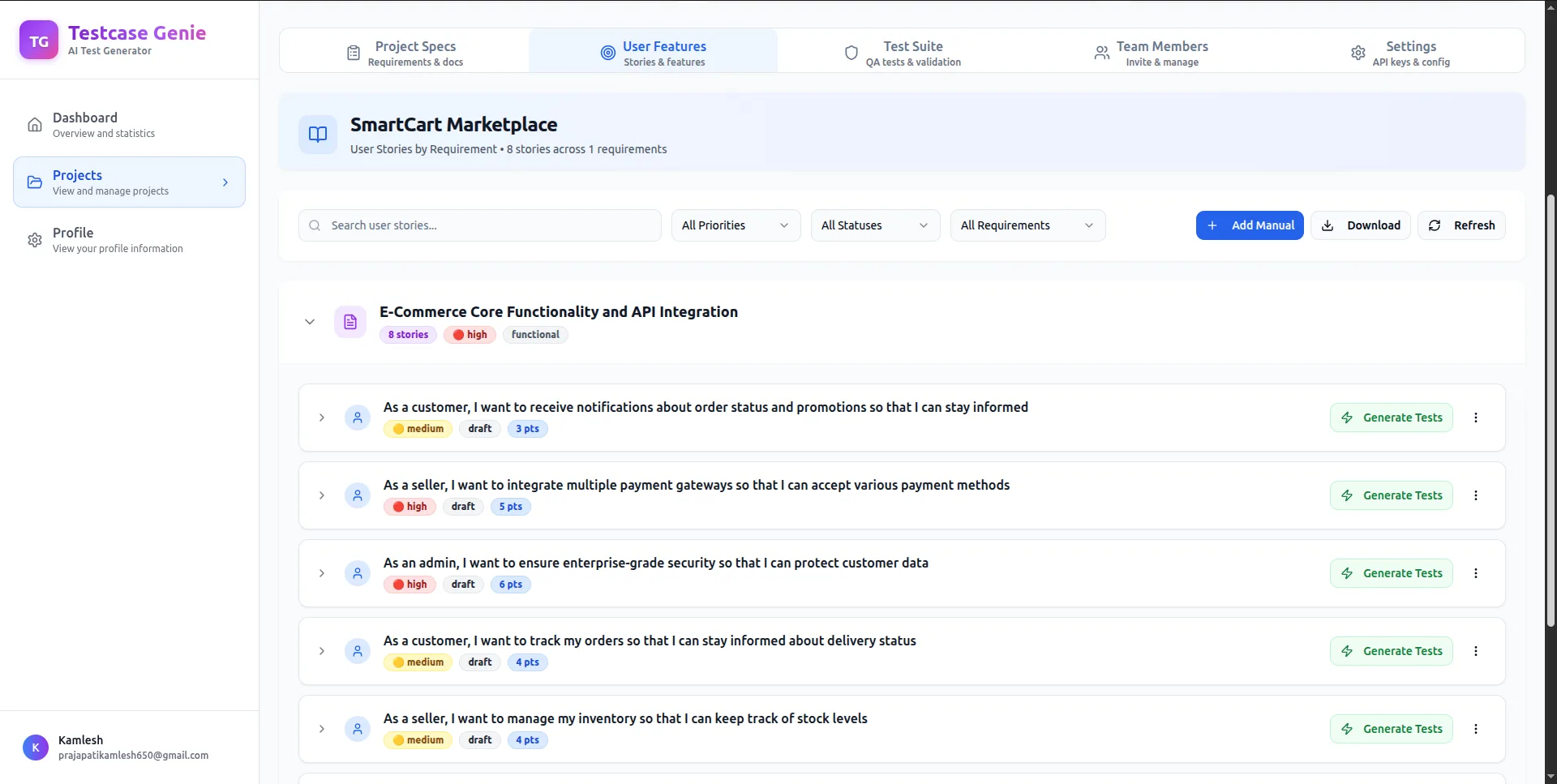
AI-Powered User Story Generation
- Automatically extract and generate user stories from PRD text
- One user story per requirement for clear traceability
- Smart parsing of complex documentation
Intelligent Filtering & Organization
- Automatically extract and generate user stories from PRD text
- One user story per requirement for clear traceability
- Smart parsing of complex documentation
Intelligent Filtering & Organization
- Filter requirements and user stories based on priority levels.
- Sort items using story points and estimation values.
- Categorize requirements with custom tags and functional classifications.
Manual Enhancement Capability
- Add custom user stories to any requirement
- Edit AI-generated stories for precision
- Maintain full control over your documentation
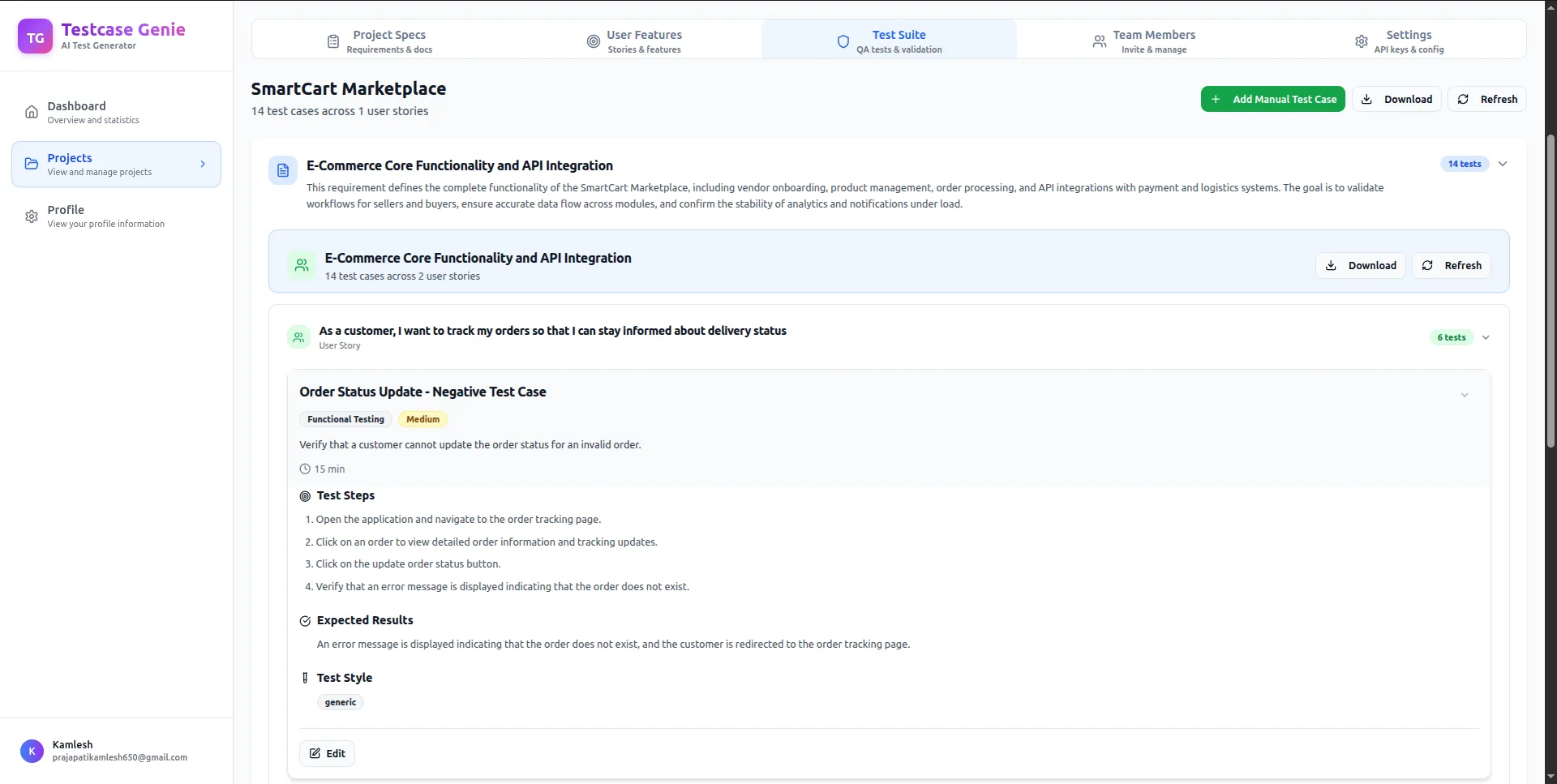
Automated Test Case Generation
- Generate structured test cases directly from user stories.
- Include detailed test steps with preconditions and postconditions.
- Assign unique test IDs with test type classification for tracking and execution.
Manual Test Case Creation
- Add custom test cases to any user story
- Maintain consistency with automated tests
- Full editing capabilities
Export & Integration
- Download user stories in multiple export formats.
- Export detailed test cases to Excel including steps, conditions, and labels.
- Generate structured outputs with unique test IDs for integration with test management tools.
Flexible PRD Management
- Upload PRDs during project creation
- Add PRDs later through settings
- Support for multiple document formats
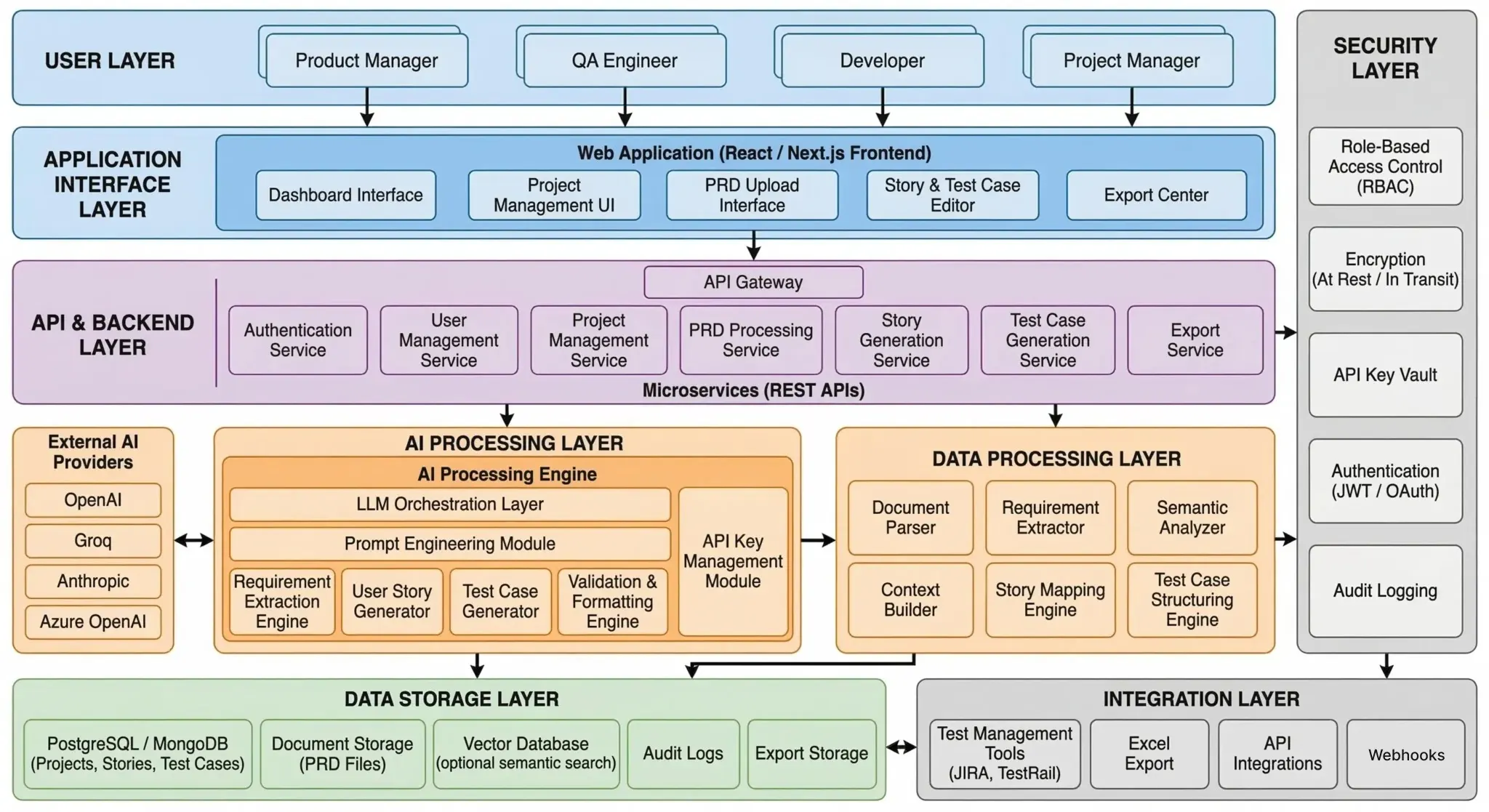
How It Works
Use Cases
Agile Development Teams
- Scenario: Sprint planning with new feature requirements.
- Approach: Upload feature PRD → Generate user stories → Estimate story points → Generate related test cases.
- Outcome: Enables structured planning of development and testing activities for upcoming sprints.
Enterprise QA Departments
- Scenario: Managing large and complex requirement documentation for enterprise applications.
- Approach: Upload requirement documents in sections → Organize requirements by priority → Generate structured test suites.
- Outcome: Maintains clear traceability between requirements and test cases across extensive documentation.
Startup Product Teams
- Scenario: Limited QA resources with rapidly evolving product requirements.
- Approach: Upload PRD → Automatically generate user stories and test cases → Refine content manually if needed.
- Outcome: Enables structured testing preparation without requiring extensive QA resources.
Regulated Industries (Healthcare/Finance)
Compliance requires complete requirement-to-test traceability Solution: PRD upload → User stories with requirement IDs → Test cases with unique IDs → Export audit trail Benefit: Complete compliance documentation automatically
Mobile App Development
Cross-platform app with complex user flows Solution: Create mobile project → Upload UX/UI PRD → Generate user journey stories → Platform-specific test cases Benefit: Comprehensive coverage across iOS and Android
API Development Teams
Microservices architecture with extensive API documentation Solution: Create API project → Upload API specs → Generate endpoint stories → Create integration test cases Benefit: Complete API test coverage from specification
Impact
Time Efficiency
- Automates the conversion of requirement documents into structured user stories and test cases.
- Reduces manual effort involved in preparing testing documentation.
- Helps teams streamline requirement analysis and test preparation workflows.
Quality Improvement
- Maintains alignment between requirements, user stories, and test cases.
- Helps ensure testing activities reflect the intended system behavior.
- Supports structured validation of features during development.
Cost Optimization
- Minimizes operational effort associated with manual documentation tasks.
- Improves resource utilization by automating repetitive processes.
- Helps organizations manage testing workflows more efficiently.
Team Productivity
- Allows QA teams to focus on test execution and validation activities.
- Provides developers with clearly defined user stories and acceptance criteria.
- Enables product managers to maintain better visibility of requirements and testing scope.
Consistency and Standardization
- Ensures a structured format for user stories and test cases.
- Promotes consistent documentation practices across projects.
- Helps teams maintain uniform workflows for requirements and test management.
Scalability
- Supports management of multiple projects within a centralized system.
- Enables handling large volumes of required documents and testing artifacts.
- Allows teams of different sizes to manage documentation and testing processes effectively.